
Тип процедуры
SurgicalПродолжительность процедуры
3-5 HoursДни пребывания в больнице
5 DaysCranioplasty is a reconstructive neurosurgical procedure used to repair a missing, damaged or misshapen section of the skull. The repair restores the protective covering of the brain and can improve the contour and symmetry of the head. For patients considering cranioplasty in India, the treatment plan depends on the size and position of the skull defect, the condition of the scalp and underlying tissues, previous procedures and overall health.
India is considered by many international patients for specialist neurosurgical care, access to modern imaging and reconstructive materials, and treatment options at different price points. MedTripz helps patients from the Middle East, Africa and CIS understand their options and coordinate the practical stages of treatment. Clinical suitability and outcomes must always be assessed by the treating neurosurgical team.
Cranioplasty, also called skull reconstruction, repairs an opening or irregularity in the cranial bone. A surgeon places the patient's preserved bone flap or a suitable implant over the defect and secures it to the surrounding skull. The reconstruction is designed to protect the brain, restore the skull's shape and provide a stable covering for the area.
The procedure is different from craniotomy and craniectomy. A craniotomy usually involves temporarily removing a bone flap to access the brain and replacing it during the same operation. A craniectomy leaves a section of bone off, sometimes to allow room for brain swelling. Cranioplasty is a later repair of the resulting skull defect when the clinical team considers reconstruction appropriate.
A neurosurgeon may consider reconstruction when a skull defect affects protection, contour or, in selected cases, neurological function. Common reasons include:
Previous decompressive surgery: A section of skull may have been left unreplaced after an earlier operation to accommodate brain swelling.
Head injury: Trauma can cause a depressed fracture, missing bone or a defect that requires reconstruction.
Infection or bone damage: An infected or damaged portion of cranial bone may need removal, followed by reconstruction once infection is controlled.
Congenital or developmental defects: Some people are born with, or develop, an area of incomplete or abnormal skull formation.
Removal of a skull lesion: Reconstruction may be needed after removal of a lesion involving cranial bone.
The decision is individual. A visible indentation does not automatically mean surgery is required; the potential benefits, risks and the patient's medical condition must be reviewed.
The choice of reconstruction depends on defect dimensions, location, previous infection, bone availability, soft-tissue condition, age and the surgeon's assessment.
This method uses the patient's own bone, often a preserved bone flap removed during an earlier operation. It can provide a natural fit when the bone remains suitable. However, the team must assess whether it has been damaged, infected or resorbed. Bone resorption, in which the graft gradually loses volume, is a recognised concern.
Titanium plates, mesh or patient-specific implants can be used to rebuild the missing section. Titanium is strong and can be shaped to the defect. The design and thickness are selected according to the reconstruction requirements and the surgeon's preference.
Polyetheretherketone (PEEK) is a medical-grade polymer that can be manufactured as a customised implant using imaging data. It can reproduce complex contours and has imaging characteristics that may be useful during follow-up. Availability and suitability depend on the case and the treating centre.
Polymethyl methacrylate (PMMA), hydroxyapatite and other approved biomaterials may be considered in selected cases. Each material has different properties, handling requirements, cost implications and potential complications. There is no single material that is best for every patient.
Planning starts with a review of the patient's medical history, previous operation notes, current symptoms and recovery progress. A CT scan is commonly used to measure the skull defect and assess the surrounding bone. Three-dimensional reconstruction may help with complex defects or the design of a customised implant. MRI may be requested when additional information about underlying soft tissues or the brain is needed.
The team also checks the condition of the scalp, previous wound healing, signs of infection, fluid collections and any history of cerebrospinal fluid problems. Blood tests, anaesthesia assessment and review of medicines may be required. Patients should disclose blood thinners, allergies, chronic conditions and all medicines or supplements they take.
If the defect follows an earlier operation, the timing of reconstruction is based on clinical readiness—not a fixed calendar. Brain swelling should have settled sufficiently, the wound should be suitable and any active infection must be addressed. The surgeon may postpone surgery if these conditions are not met.
Cranioplasty is generally performed under general anaesthesia. The surgical team prepares the scalp and reopens an incision, often following the previous surgical line where appropriate. The scalp is carefully lifted to expose the defect while protecting the tissues covering the brain.
The edges of the defect are prepared, and the selected bone flap or implant is positioned. The surgeon checks its fit and contour, then secures it using plates, screws or other fixation systems. Bleeding is controlled, and the scalp is closed with sutures or staples. A temporary drain may be placed to remove excess fluid.
The MedTripz webpage lists an estimated procedure duration of 3–5 hours and a hospital stay of approximately 5 days. These are indicative figures, not a guarantee; the actual duration depends on the defect, previous surgeries, implant design and postoperative progress.
After surgery, patients are monitored in a recovery area or neurosurgical unit. The team checks alertness, limb movement, vital signs, the incision and any signs of swelling or bleeding. A postoperative CT scan may be performed to review implant position and the surgical site.
Some patients experience temporary headache, scalp tenderness, tiredness or swelling. Pain relief and other medicines are provided according to clinical need. A drain, if used, is removed when the team considers it appropriate. Discharge depends on stable observations, wound condition, mobility and the absence of concerning complications.
At home, patients should follow instructions about wound care, bathing, sleeping position, medicines and activity. Avoid strenuous exercise, heavy lifting, contact sports and any activity that could cause a head injury until the surgeon gives clearance. Follow-up appointments allow the team to assess healing and address concerns. Rehabilitation may be advised if the patient has ongoing movement, speech or cognitive difficulties from the original condition.
Cranioplasty is a major operation and has risks. These may include:
Infection involving the incision, bone or implant.
Bleeding, blood collection or fluid accumulation.
Seizures or new neurological symptoms.
Stroke or injury to nearby structures.
Wound-healing problems or leakage of cerebrospinal fluid.
Implant displacement, loosening or need for revision.
Resorption of a preserved bone flap.
Blood clots in the legs or lungs and complications related to anaesthesia.
The likelihood of complications varies with the patient's health, reason for the defect, previous infection, implant type and surgical complexity. Ask the treating surgeon which risks are most relevant and how they would be managed. New weakness, seizure, confusion, severe or worsening headache, fever, wound discharge or clear fluid leakage requires urgent medical assessment.
The Cranioplasty Cost in India depends on the size and complexity of the skull defect, the material selected, whether a customised implant is required, the patient's medical condition, length of admission, investigations and postoperative care.
MedTripz currently displays the following indicative estimates:
These figures are reference estimates from the MedTripz procedure page and should not be treated as a confirmed quotation. The final amount may differ after medical-record review and hospital assessment. Patients should request an itemised estimate clarifying surgeon and anaesthesia fees, implant or material charges, hospital accommodation, investigations, medicines, intensive-care needs if applicable, and follow-up arrangements. Any exclusions or possible additional charges should be discussed before travel.
India offers international patients access to neurosurgical teams, diagnostic imaging and a range of reconstruction materials, including options for patient-specific implants where clinically suitable. Treatment costs may be more accessible than in some countries, although comparisons should be made using equivalent treatment plans and inclusions rather than headline prices alone.
Patients should assess the treating team's experience with complex cranial reconstruction, the hospital's neurosurgical and intensive-care facilities, implant availability, infection-prevention protocols, emergency support and follow-up arrangements. A clear written treatment plan and transparent estimate are important parts of informed decision-making.
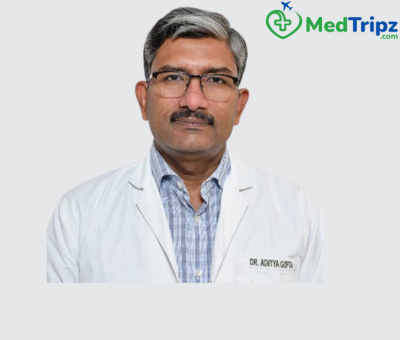
Chief Neurosurgery & CNS Radiosurgery & Co Chief Cyberknife

EXECUTIVE DIRECTOR & HOD NEURO SURGERY

MBBS, MS - General Surgery, MCh - Neuro Surgery Neurosurgeon,Spine Surgeon (Neuro)
MedTripz acts as a medical tourism facilitator for patients travelling from the Middle East, Africa and CIS. We help reduce the administrative and coordination burden by:
Collecting relevant medical reports, CT/MRI images and previous surgery records for review.
Coordinating communication with suitable treating teams and seeking case-specific opinions.
Helping patients understand proposed treatment plans, implant options and indicative cost estimates.
Assisting with appointment coordination, travel planning, visa guidance and accommodation arrangements.
Supporting communication during the treatment journey and coordinating follow-up information for the patient's local doctor.
MedTripz does not perform surgery or make clinical decisions. The treating neurosurgeon and hospital are responsible for diagnosis, treatment recommendations, consent and medical care. Patients should obtain written advice on how long they need to remain in India before travelling home, especially if further imaging or wound review is required.
No. Craniotomy is an operation in which a skull section is temporarily removed to access the brain and is commonly replaced during that operation. Cranioplasty repairs a skull defect that remains after an earlier procedure or injury.
The MedTripz page gives an estimated duration of 3–5 hours. Complex defects, scar tissue, customised implants or additional procedures may affect operating time.
The MedTripz estimate is around five days. The actual stay depends on recovery, monitoring requirements and any complications. International patients should also plan for the surgeon's recommended review period before flying.
There is no universally best material. Preserved bone, titanium, PEEK, PMMA and other biomaterials may be considered. The choice depends on the defect, bone quality, infection history, soft-tissue condition, availability and cost.
There is no fixed timeline for every patient. Reconstruction is considered when brain swelling has settled, the wound is suitable, infection is controlled and the patient is medically stable. The treating neurosurgeon determines the timing using examination and imaging.
Yes. Restoring the missing or sunken skull area can improve the contour and symmetry of the head. The degree of cosmetic improvement depends on the defect and reconstruction plan; a specific appearance cannot be guaranteed.
If you are exploring cranioplasty in India, MedTripz can help you organise a medical-record review, understand available reconstruction approaches and request a personalised estimate. Share your latest scans and previous treatment records so the appropriate medical team can assess your case and advise on the next steps.

New Delhi, India

Gurugram, India

Честные консультации, надежная поддержка, беспроблемные путешествия.
Предоставьте нам
Отчеты


Получить медицинскую помощь
Мнения


До прибытия
Устройства


Виза
Поддержка


Поддержка в
Лечения


Возвращение и
Последующий уход


