
Тип процедуры
SurgicalПродолжительность процедуры
3-4 HoursДни пребывания в больнице
5 DaysDeep brain stimulation (DBS) is a surgical option for selected people whose neurological symptoms remain difficult to control with medication or other treatments. It uses thin electrodes placed in specific brain regions and an implanted pulse generator (IPG) that delivers controlled electrical impulses. This page focuses on DBS systems powered by a non-rechargeable battery, including device selection, implantation, programming, battery replacement and long-term care.
India attracts international patients seeking specialist neurosurgical care. MedTripz helps patients from the Middle East, Africa and CIS organise medical information, treatment coordination and cost estimates before travelling.
DBS does not remove or destroy the targeted brain tissue. Instead, electrical stimulation is delivered through one or more electrodes to influence abnormal neural activity associated with symptoms. The electrodes connect through extension wires to an IPG, usually placed under the skin of the upper chest.
A non-rechargeable IPG contains a sealed battery that does not need routine charging by the patient. Its battery commonly lasts around three to five years, although actual duration depends on the device model, stimulation settings and energy requirements. When the battery approaches the end of its service life, the IPG is replaced surgically. In many cases, the brain electrodes and extension wires can remain in place if they are functioning properly.
The choice should be made with the treating team: non-rechargeable models avoid routine charging but generally require more frequent battery replacement.
DBS is not suitable for everyone. A multidisciplinary team reviews the diagnosis, symptom pattern, medication response, general health and ability to attend programming appointments.
Depending on the indication and applicable approvals, DBS may be considered for:
Parkinson’s disease when disabling motor symptoms, tremor or medication-related fluctuations remain inadequately controlled.
Essential tremor that significantly affects daily activities despite appropriate treatment.
Certain forms of dystonia that cause substantial functional difficulty.
Selected cases of drug-resistant epilepsy after specialist assessment.
Other conditions only when supported by specialist guidance; some uses remain investigational.
Benefits depend on the diagnosis and targeted symptoms. DBS is not a cure, does not stop disease progression and may not remove the need for medication.
Assessment usually includes a detailed review of medical history, symptoms and previous treatments. Depending on the case, investigations may include:
Brain MRI and/or CT imaging to assess anatomy and plan electrode placement.
Neurological examination and condition-specific symptom scoring.
Review of medication response, sometimes comparing symptoms on and off medication.
Neuropsychological or cognitive assessment where relevant.
Blood tests, anaesthesia assessment and other investigations based on medical history.
Patients should disclose medicines, supplements, allergies, previous operations and implanted devices. Never stop blood thinners without medical instructions; follow the team’s fasting and preparation guidance.
Surgery involves brain-electrode placement and implantation of the pulse generator, either during one admission or in separate stages.
Using preoperative imaging, the team identifies the brain target. The head is stabilised and a small skull opening is made to guide the electrode into position. Depending on the case, surgery uses general anaesthesia or an awake approach with local anaesthesia and sedation; selected patients may be asked to perform simple tasks during positioning.
The electrodes are secured, connected to extension wires beneath the skin and may be checked with imaging.
The IPG is placed in a pocket under the upper-chest skin and connected to the electrodes. The system is checked and incisions are closed; configuration and timing vary by patient.
A neurologist or DBS specialist later uses an external programmer to fine-tune stimulation. Several visits may be needed, and medication may also require adjustment.
The main advantage is avoiding routine home charging, which may suit people who find charging routines difficult.
Selection should also consider energy needs, expected battery life, dexterity, caregiver support, follow-up access and preference. Patients should understand that replacement surgery is generally needed sooner than with many rechargeable models.
The cost of DBS surgery with a non-rechargeable battery in India depends on the device selected, number of leads, surgical complexity, hospital stay and services included in the treatment package.
MedTripz currently lists the following indicative cost information:
These are indicative figures, not a guaranteed quotation. The final estimate depends on device model, electrode configuration, investigations, professional and hospital fees, room category, medicines, programming and stay duration. Request an itemised estimate and confirm whether travel, accommodation, interpretation, follow-up and future battery replacement are excluded or included.
Hospital observation is required after implantation. The length of stay depends on the surgical approach, recovery and the treating team’s protocol. Incision care, activity restrictions and discharge timing should follow the hospital’s written instructions.
Activity restrictions and wound-care instructions vary. Seek urgent medical attention for fever, wound discharge, increasing redness or swelling, severe headache, new weakness, seizures or sudden speech or vision changes.
Follow-up checks symptoms, settings, device function and battery status. Battery life is commonly three to five years but may be shorter with high-energy settings. Arrange replacement before stimulation stops. The IPG can often be exchanged without replacing functioning brain leads.
Carry device identification and tell clinicians about the implant before scans or procedures. MRI is permitted only when the exact system and scanning conditions meet manufacturer requirements.
DBS involves brain surgery and implanted hardware. Potential risks include bleeding inside the skull, infection, seizure, stroke, anaesthesia-related complications and problems related to electrode placement. Device-related complications can include lead movement or breakage, wire problems, infection around the IPG, battery depletion and further surgery.
Stimulation can also cause side effects such as tingling, speech changes, balance difficulty, involuntary movements, mood changes or visual symptoms. Some effects may improve when settings are adjusted, but this cannot be guaranteed. The treating neurologist and neurosurgeon should explain risks relevant to the patient’s diagnosis and health.
India offers neurosurgical services and multidisciplinary assessment. International patients should compare the complete care plan—not only the procedure price—including device, programming, hospital stay and future battery replacement.
Before travelling from the Middle East, Africa or CIS, confirm how programming will continue at home and obtain the device summary, operative report and follow-up plan for the local neurologist.
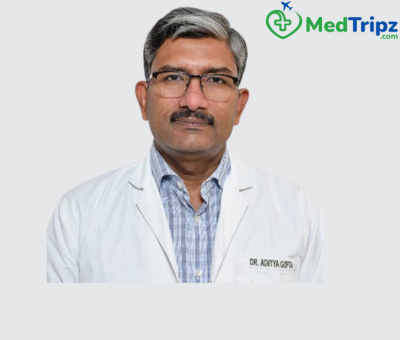
Chief Neurosurgery & CNS Radiosurgery & Co Chief Cyberknife

EXECUTIVE DIRECTOR & HOD NEURO SURGERY

MBBS, MS - General Surgery, MCh - Neuro Surgery Neurosurgeon,Spine Surgeon (Neuro)
MedTripz coordinates medical travel but does not perform surgery or replace clinical advice. Support may include:
Organising medical reports, imaging and treatment history for review.
Coordinating consultations and helping patients understand available treatment options.
Requesting a personalised, itemised cost estimate from the selected provider.
Assisting with appointment scheduling and relevant travel-document guidance.
Helping coordinate accommodation, local transfers and language support where available.
Sharing discharge documents and helping arrange follow-up communication with the treating team.
Treating specialists remain responsible for clinical decisions and care. Confirm package inclusions and follow-up arrangements before travel.
Many non-rechargeable DBS batteries last approximately three to five years. Actual lifespan depends on the device and stimulation settings.
No. DBS may reduce selected symptoms and improve daily function in suitable patients, but it does not cure the underlying condition. Medication and ongoing specialist care may still be needed.
Neither option is best for everyone. A non-rechargeable battery avoids routine charging but generally requires earlier surgical replacement. The decision should reflect clinical needs, lifestyle and patient preference.
Usually, the pulse generator can be replaced without removing brain electrodes, provided the leads and extension wires remain functional. The treating team confirms the approach after checking the system.
Travel timing must be approved by the treating team. Patients should remain available for wound review, initial programming and assessment of complications. A written plan for ongoing programming and battery monitoring should be arranged before returning home.
Share recent medical reports, imaging, diagnosis, medication history and any previous DBS information with MedTripz. A provider can review the case and prepare an individual estimate based on the proposed device and care plan.
If you are considering DBS surgery with a non-rechargeable battery in India, MedTripz can help coordinate the next steps—from sharing medical records for review to obtaining a personalised estimate and organising travel-related support. Contact MedTripz to discuss your case and understand the arrangements before travelling.

New Delhi, India

Gurugram, India

Честные консультации, надежная поддержка, беспроблемные путешествия.
Предоставьте нам
Отчеты


Получить медицинскую помощь
Мнения


До прибытия
Устройства


Виза
Поддержка


Поддержка в
Лечения


Возвращение и
Последующий уход


