Procedure Type
spinal fusion SurgeryProcedure Duration
3-6 HoursHospital Stay (Days)
5 DaysScoliosis surgery in India offers international patients access to specialized spinal deformity correction, advanced surgical planning, and comprehensive postoperative care at competitive healthcare costs.
Scoliosis is a three-dimensional spinal deformity involving abnormal sideways curvature and vertebral rotation. Surgery may be recommended when the curvature is severe, continues progressing, or causes significant functional difficulties.
The appropriate surgical approach depends on the degree of curvature, spinal flexibility, patient age, skeletal maturity, and overall health.
For patients from the Middle East, Africa, and CIS countries, MedTripz simplifies treatment planning through specialist consultations, hospital coordination, personalized cost estimates, medical travel assistance, and postoperative follow-up arrangements.
Scoliosis occurs when the spine develops an abnormal sideways curvature, usually accompanied by rotation of the vertebrae.
A healthy spine has natural curves when viewed from the side. In scoliosis, the spine also curves sideways when viewed from behind.
The deformity may appear as a C-shaped or S-shaped curve.
Scoliosis can affect children, adolescents, and adults. While many mild cases require only monitoring, progressive or severe deformities may need specialist treatment.
Adolescent idiopathic scoliosis develops during childhood or adolescence without a clearly identifiable cause.
It is the most common form of scoliosis in teenagers.
Congenital scoliosis results from abnormal vertebral development before birth.
Treatment planning considers the spinal abnormalities and remaining growth.
Neuromuscular scoliosis occurs in association with conditions affecting muscles or the nervous system.
These patients may require additional medical and rehabilitation support.
Adult degenerative scoliosis develops through age-related changes affecting spinal discs, joints, and alignment.
Surgical decisions depend on pain, neurological symptoms, spinal balance, and functional limitations.
The degree of spinal curvature is commonly measured using the Cobb angle on standing spinal X-rays.
Mild scoliosis usually does not require surgery.
Specialists may recommend observation and periodic imaging, particularly during growth.
For growing children and adolescents, bracing may help prevent progression.
Treatment depends on skeletal maturity, curve pattern, and the likelihood of worsening.
Surgery may be considered when the curvature is severe or continues progressing.
For adolescent idiopathic scoliosis, curves approaching or exceeding 45–50 degrees commonly prompt surgical evaluation.
Very large, stiff, or complex deformities require individualized planning.
The surgeon assesses spinal flexibility, neurological safety, and the extent of correction that can be achieved without excessive risk.
The Cobb angle is important, but it does not independently determine whether surgery is necessary.
Common signs include:
Uneven shoulders
One shoulder blade appearing more prominent
Unequal hip height
An uneven waistline
Visible spinal curvature
Rib prominence during forward bending
Changes in posture or body alignment
Adults may also experience back pain, reduced walking tolerance, or symptoms associated with nerve compression.
Severe thoracic deformities can affect respiratory function in selected patients.
Standing X-rays measure the Cobb angle and evaluate overall spinal alignment.
Side-bending or traction images help assess curve flexibility.
MRI may be recommended for unusual curve patterns, neurological findings, congenital abnormalities, or other specific concerns.
CT provides detailed information about vertebral anatomy when required for complex surgical planning.
In younger patients, remaining skeletal growth influences treatment decisions.
The surgical team also evaluates medical conditions, nutritional status, and anesthesia fitness.
The Scoliosis Surgery (Depending on Curvature) Cost in India varies according to deformity severity, surgical complexity, number of spinal levels, and implant requirements.
These are indicative estimates published on the MedTripz scoliosis surgery page. Actual costs depend on specialist evaluation and the hospital's treatment quotation.
Curvature Severity: Severe or rigid curves may require more complex correction.
Number of Spinal Levels: Longer correction procedures can involve additional implants and operating resources.
Curve Flexibility: Rigid deformities may require additional surgical techniques.
Patient Age: Growing children and adults have different treatment considerations.
Surgical Technology: Navigation systems and intraoperative monitoring may affect resource requirements.
Hospitalization: Admission duration and postoperative monitoring influence expenses.
Rehabilitation: Follow-up consultations and rehabilitation may involve additional costs.
MedTripz helps international patients obtain individualized quotations and understand which services are included.
Posterior spinal fusion is a commonly performed surgical approach for adolescent idiopathic scoliosis.
The surgeon accesses the spine from the back and uses implants to correct and stabilize the curvature.
Bone graft material supports long-term fusion.
An anterior approach may be considered in selected cases.
Suitability depends on curve location, anatomy, and surgical goals.
Vertebral body tethering is a motion-preserving technique available for carefully selected growing patients.
It is not suitable for every curve and carries risks such as tether breakage or the need for further surgery.
Children with early-onset scoliosis may require specialized approaches that control deformity while accommodating spinal growth.
These procedures require individualized specialist assessment.
Severe or rigid curves may require additional corrective techniques.
The surgeon balances the desired correction against neurological safety and overall surgical risk.
The surgeon reviews spinal imaging, curve measurements, flexibility, and medical fitness.
The intended correction and fusion levels are determined before surgery.
Scoliosis correction is generally performed under general anesthesia.
Screws, rods, or other appropriate implants are positioned to help correct and stabilize the spine.
The surgeon gradually adjusts spinal alignment while protecting neurological structures.
Intraoperative neurological monitoring may be used during complex procedures.
When fusion is planned, bone graft material encourages the selected vertebrae to heal together.
The patient is monitored for neurological function, pain control, blood loss, and early complications.
The main objectives of scoliosis surgery are to prevent further progression, improve spinal alignment, and maintain long-term stability.
Potential benefits include:
Reduced spinal curvature
Improved shoulder and trunk balance
Better overall posture
Prevention of further deformity progression
Improved appearance of spinal asymmetry
Better functional comfort in selected patients
The amount of correction depends on the original curvature and spinal flexibility.
Surgery does not guarantee a completely straight spine, complete pain relief, or improved lung function in every patient.
MedTripz lists an indicative hospital stay of approximately five days.
Actual hospitalization depends on surgical complexity and postoperative recovery.
Patients are usually encouraged to begin walking when medically appropriate.
Pain management and safe movement are important during the initial recovery period.
Many adolescents gradually resume routine activities over several weeks.
Adults and patients undergoing complex correction may require longer recovery.
Spinal fusion develops over several months.
Patients may need to restrict heavy lifting, twisting, and high-impact activities during healing.
Physiotherapy and rehabilitation plans are individualized according to age, surgical technique, and recovery progress.
Scoliosis surgery is a major spinal procedure and carries potential risks.
These include:
Bleeding or infection
Blood clots
Nerve or spinal cord injury
Implant-related complications
Failure of bone fusion
Persistent pain or stiffness
Incomplete correction
Loss of correction over time
Need for revision surgery
The surgical team should explain individual risks, expected correction, and possible alternatives before obtaining informed consent.
Long-term follow-up helps assess spinal alignment, implant stability, bone healing, and functional recovery.
The fused portion of the spine has permanently reduced movement.
The effect on overall flexibility depends on the number and location of treated vertebrae.
Patients should receive a clear follow-up schedule and guidance regarding physical activity.
Selected Indian hospitals provide coordinated care involving spinal deformity surgeons, anesthesiologists, rehabilitation professionals, and specialized nursing teams.
Modern imaging and appropriate operating facilities support complex curvature assessment and correction.
India offers international patients opportunities to compare specialist-led scoliosis surgery at competitive healthcare costs.
Structured rehabilitation and follow-up planning support recovery after complex spinal procedures.
Patients should prioritize relevant surgical experience, safety practices, and transparent quotations rather than price alone.
Patients from the Middle East, Africa, and CIS countries should obtain a specialist review before confirming travel.
Important medical documents include:
Recent standing full-spine X-rays
Cobb angle measurements
MRI or CT reports, if available
Previous bracing or treatment records
Neurological assessment findings
Relevant medical history
Patients should also plan for a suitable recovery period and obtain medical clearance before long-distance travel.

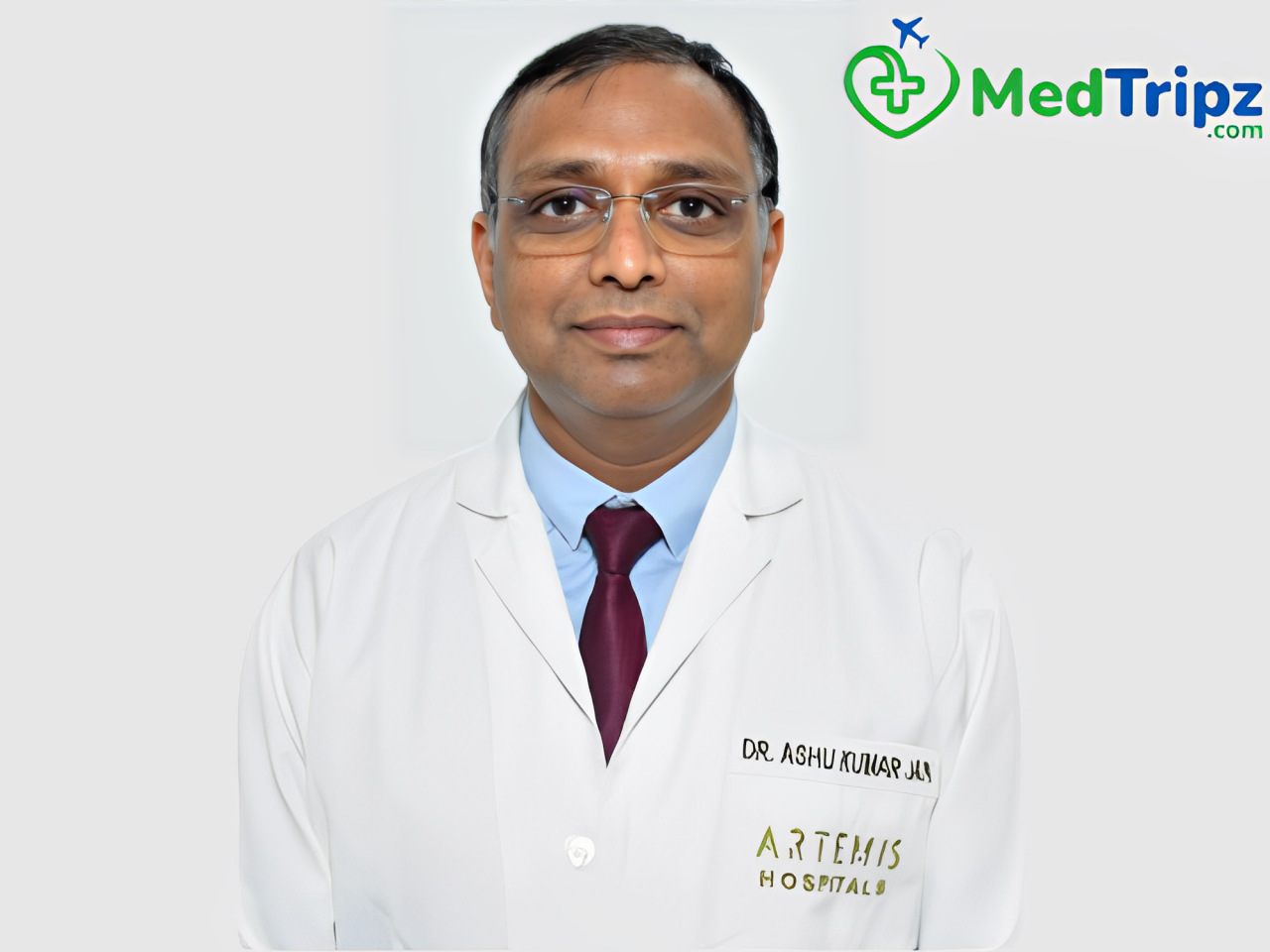
Head- Ortho Spine & Scoliosis Surgery
Director - Orthopaedics MS (Orthopedics), DNB (Orthopedics), MNAMS,MBBS,
MedTripz is a medical tourism facilitator helping international patients coordinate scoliosis treatment arrangements.
Its support may include:
Medical report coordination
Specialist consultation scheduling
Suitable hospital shortlisting
Preliminary surgical quotations
Medical visa guidance
Accommodation arrangements
Interpreter assistance where available
Postoperative follow-up coordination
MedTripz does not perform surgery, determine medical eligibility, or guarantee treatment outcomes.
MedTripz publishes indicative costs between USD 14,000 and USD 27,500. Final expenses depend on curvature severity, surgical requirements, and hospital quotations.
For adolescent idiopathic scoliosis, surgery is commonly considered when curves approach or exceed 45–50 degrees, particularly when progression is expected.
Many mild or moderate curves can be managed through monitoring or bracing. Treatment depends on age, remaining growth, and curve progression.
Spinal fusion aims to create permanent stabilization. However, complications or future changes can occasionally require additional treatment.
Initial recovery generally takes several weeks, while bone healing and return to more demanding activities can take several months.
Yes. MedTripz can help obtain preliminary hospital estimates after reviewing medical reports and spinal imaging.
Effective scoliosis treatment requires accurate curvature assessment, individualized surgical planning, and appropriate postoperative care.
MedTripz helps international patients explore suitable hospitals, understand expected treatment costs, and coordinate medical travel.
Contact MedTripz to request personalized scoliosis surgery cost guidance and assistance planning your treatment journey in India.

Gurugram, India

Gurugram, India

Gurugram, India

Honest Guidance, Reliable Support, Seamless Journeys.
Provide Us
Reports


Get Medical
Opinions


Pre-Arrival
Arrangements


Visa
Support


Assistance in
Treatments


Fly back and
Follow Up